
What a Hail Damage Roof Inspection Actually Involves
Functional hail damage rarely looks like damage from the ground. Here's what a real inspection covers, what adjusters look for, and where claims fall apart.
Call (945) 231-3781 for a Free QuoteNorth Texas gets hail. Collin County sits in one of the more active corridors in the country for it, and most homeowners here will file at least one roof claim during the time they own their house.
The problem is that the inspection is the part almost nobody understands, and it's the part that decides how your claim goes.
We've been inspecting roofs across DFW since 1997. Here's what a real inspection covers, what adjusters look for, and where claims fall apart.
Hail damage usually doesn't look like damage
The first thing to know: functional hail damage rarely looks dramatic from the ground. Your roof can be fully compromised and still look fine from the driveway.
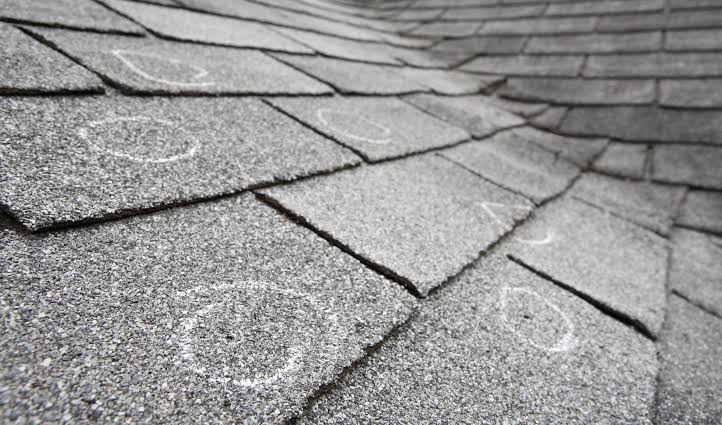
What actually matters is bruising – impact points where the hailstone has fractured the shingle mat underneath the granule surface. The granules come loose. The mat cracks. Water starts working into the fracture and the shingle fails from the inside over the following months and years.
You cannot see this from the ground. You often can't see it clearly from a ladder. It has to be found on the roof, marked, and documented.
This is also why the "your roof looks fine to me" conversation is so common and so misleading. It usually is fine, visually. That has nothing to do with the condition of the shingle.
What gets documented during the inspection
A proper hail inspection is a documentation exercise as much as a physical one. The report is what your insurance carrier reads.
Test squares. The standard method is a 10x10 foot square chalked out on each slope. Impacts inside that square get counted and marked. Carriers generally look for a specific number of hits per square before they'll accept the slope as damaged, so this count is the single most important number in the report.
Every slope, separately. North, south, east, west. Hail comes in at an angle, driven by wind, so damage is almost never even across a roof. A carrier may approve two slopes and deny two others. Each one gets its own test square and its own photo set.
Soft metals. Gutters, downspouts, vents, flashing, gutter aprons, and any exposed metal. Hail leaves clean dents in soft metal that are much easier to photograph than shingle bruising, and they corroborate the date and severity of the storm event. Adjusters weight this heavily.
Collateral damage. AC condenser fins, window screens, fence caps, mailboxes, garage doors. None of this is roofing, but all of it helps establish that a hail event of a given size actually hit your specific address.
Existing conditions. Prior repairs, ventilation problems, decking issues, previous layers. Documenting these upfront prevents the carrier from later attributing storm damage to age or neglect.
Photos with context. Wide shots that establish location on the roof, then close shots of individual impacts. Photos with no context are easy for a carrier to dismiss.
Why we hold HAAG certification
Our inspector is HAAG Certified, credential #991904014.
HAAG Engineering is the organization whose damage assessment standards most insurance carriers train their own adjusters on. Their materials are the reference point for what counts as functional damage versus cosmetic wear across most of the industry.
When our inspection report and your adjuster's report are built on the same standard, the conversation is about the evidence rather than about methodology. That is a meaningfully different meeting than one where a contractor and an adjuster are arguing from different playbooks.
We're also RCAT certified and hold Texas contractor license #1223708.
When to schedule an inspection
- Within a few days of a known storm. Fresh damage is easier to document and ties clearly to a dated weather event.
- Before your carrier's filing deadline. Most Texas policies have a window for storm claims – check yours, because it passes faster than people expect.
- If your neighbors are getting roofs replaced. Hail swaths are geographic. If houses on your street are having work done, your address was in the same event.
- Before you buy or sell. Hail damage transfers with the property.
- Not after a door knock. Storm-chasing crews arrive here within hours of an event and a good portion are out of state and gone by the following season. Ask any contractor for their Texas license number before they get on your roof.
What happens after the inspection
We give you the report either way, along with a straight read on what we found.
If there isn't a claim, you have documentation of your roof's current condition, which is worth having.
If you need repair or replacement, everything we install carries a lifetime transferable workmanship warranty. Transferable matters – if you sell the house, the warranty goes with it.
Getting on the schedule
We're family-owned and have worked DFW since 1997. Currently rated 4.8 stars across 145 Google reviews.
Call (945) 231-3781 to schedule an inspection, or email info@autographconstruction.com.
Questions? Call (945) 231-3781
← Back to blog